4.275 € in 37 Minuten verdienen? So funktioniert es nicht!
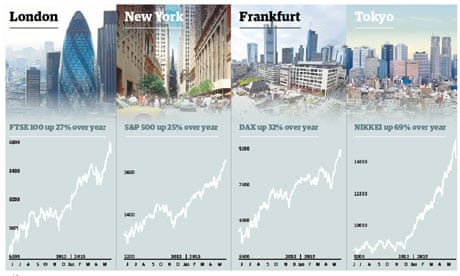
Global stock markets recently hit levels not seen since the dotcom boom of 2000, then tumbled after a dramatic sell-off in Tokyo. What should investors do? Pick up some bargains marked down in the sell-off? Or junk their investments ahead of a major crash? We show you how to be a DIY investor in five easy steps:
Step 1 Get informed
Despite the falls in Tokyo and smaller falls in London and New York, it is remarkable how much some shares have risen over the past year. EasyJet is up 165% and Lloyds 131%, although the worst-performing companies in the index, Eurasian Natural Resources and Evraz, are down 43% and 53%.
Of the 2,000 unit trusts available to small investors, Japanese ones, even after Thurday's falls, have performed best, followed by formerly bombed-out funds in Europe. For example, Artemis's European Growth fund is up 54% over the past year, while Legg Mason's Japan fund has risen by 110%. Among investment trusts it is a similar story, and not just in Europe and Japan. For example, Henderson's UK Smaller Companies investment trust has jumped 66% over the past year. Even the average fund invested in UK shares is ahead 34% over the year.
Step 2 Choosing an investment
Investing is about taking risk, but reducing that risk by spreading your money around and allocating your cash sensibly. So where do you start?
• How much can you afford to invest? Be realistic – it's better to pay down debts first, or perhaps pay into your company's pension scheme if the company also contributes. Do you have a lump sum to invest, or are you going to invest every month? Many experts say it is better to drip-feed your money into shares and funds over the long term, to help iron out the rough and smooth periods.
• What's your timeframe? If you're under 50 and saving for a pension, then it's sensible to take higher risks and invest knowing you won't need the money for 10 years. If you're saving for a mortgage deposit in a couple of years, then don't put your cash in just a few shares that might be plummeting when you need to cash in.
• Diversify your investments. Mix and match some blue-chip shares in big, safer companies with smaller investments in riskier, but potentially higher growth, smaller ones. Put money into emerging markets – but not everything.
Step 3 How to buy and sell
To buy or sell shares, there are dozens of online "execution only" brokers with relatively low charges.
Expect to pay commission and a possible annual fee for holding the shares for you (called custody), with charges dependent on how frequently you trade. Halifax Share Dealing, Saga (provided by Barclays) and Hargreaves Lansdown all charge £11.95 per trade. They claim you can open an account and start trading within minutes, once you've made a minimum initial deposit.
To buy or sell funds, your best bet is the investment "platforms" that allow you to buy, sell and manage all your investments – including Isas and self-invested personal pensions (Sipps) – in one place online.
Step 4 Keep the charges low
 It's easy to waste money on unnecessary charges. The number one rule is: avoid the daft "initial fee", which can be up to 5.5% of the sum you are investing.
If you put £5,000 in, say, the UK's biggest fund, Invesco Perpetual High Income, then £250 will go out the door in initial charges, plus another 1.5% of the value of the fund every year in annual management charges.


